New layout + a similar typeface
Our own reading layout, with an existing typeface chosen to echo the character of the book. Text and images are arranged for a clear new edition.
How we restore
The source, the intended use and the agreed degree of fidelity guide the work. We aim for a close reconstruction, not 100% identity with the original. Sample pages make the choices visible before we agree on a full edition.
Our own reading layout, with an existing typeface chosen to echo the character of the book. Text and images are arranged for a clear new edition.
Our own reading layout, with letterforms reconstructed from the historical printing. The font’s character set and the treatment of missing characters are agreed from the source.
Reconstruct the original page composition and its typeface as closely as the source allows. Line breaks, spacing and details may differ; this is not a promise of an exact facsimile.
We look at the scan, page structure, image quality and difficult passages, then agree on representative sample pages and the desired result. File sharing and any processing restrictions are agreed first.
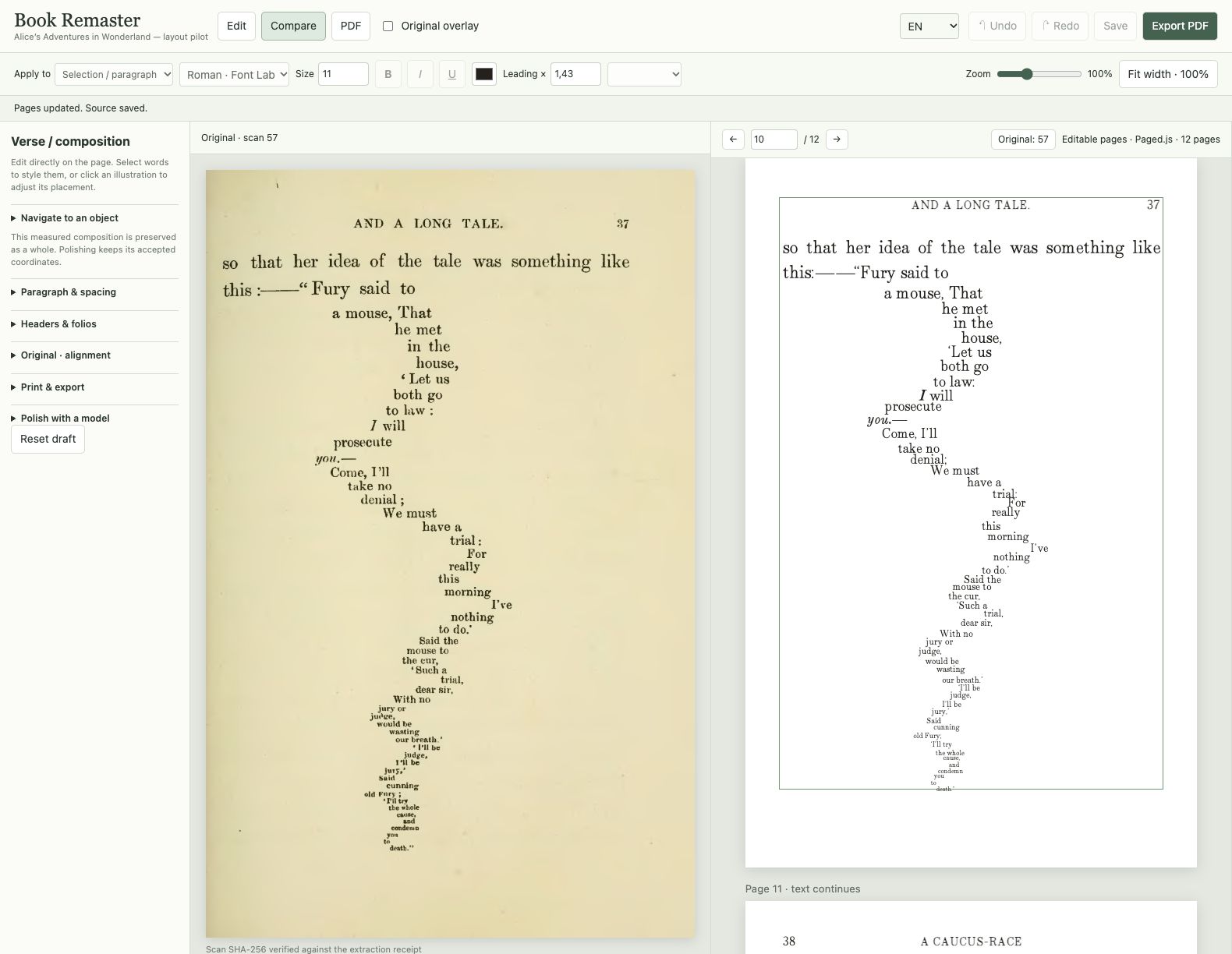
OCR and source comparison help recover paragraphs, headings, tables and formulas. Uncertain readings remain visible in the issue record. Alice’s mouse-tail poem preserves 51 lines in a new text layout; Calculus Made Easy keeps six formulas as structured equations.
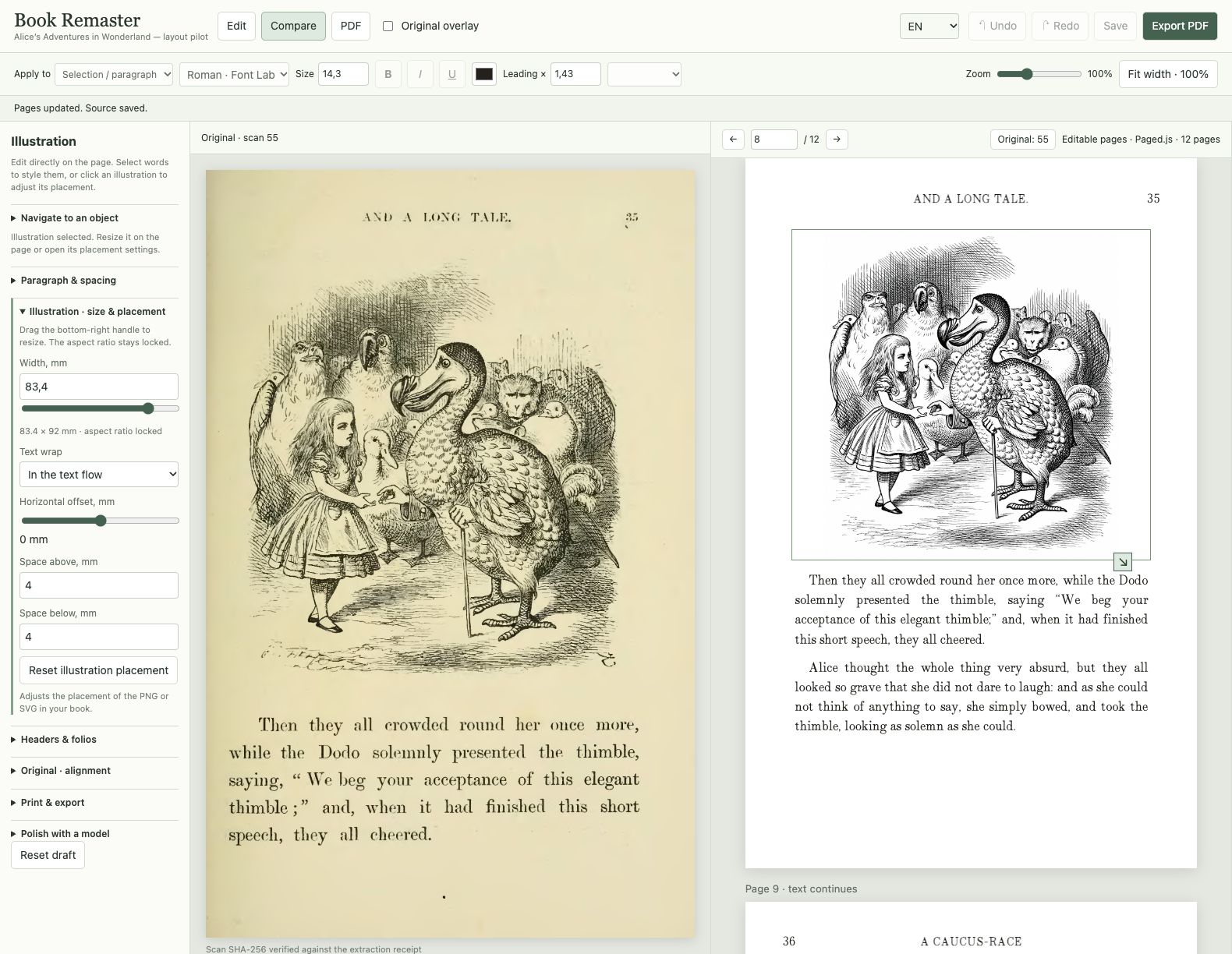
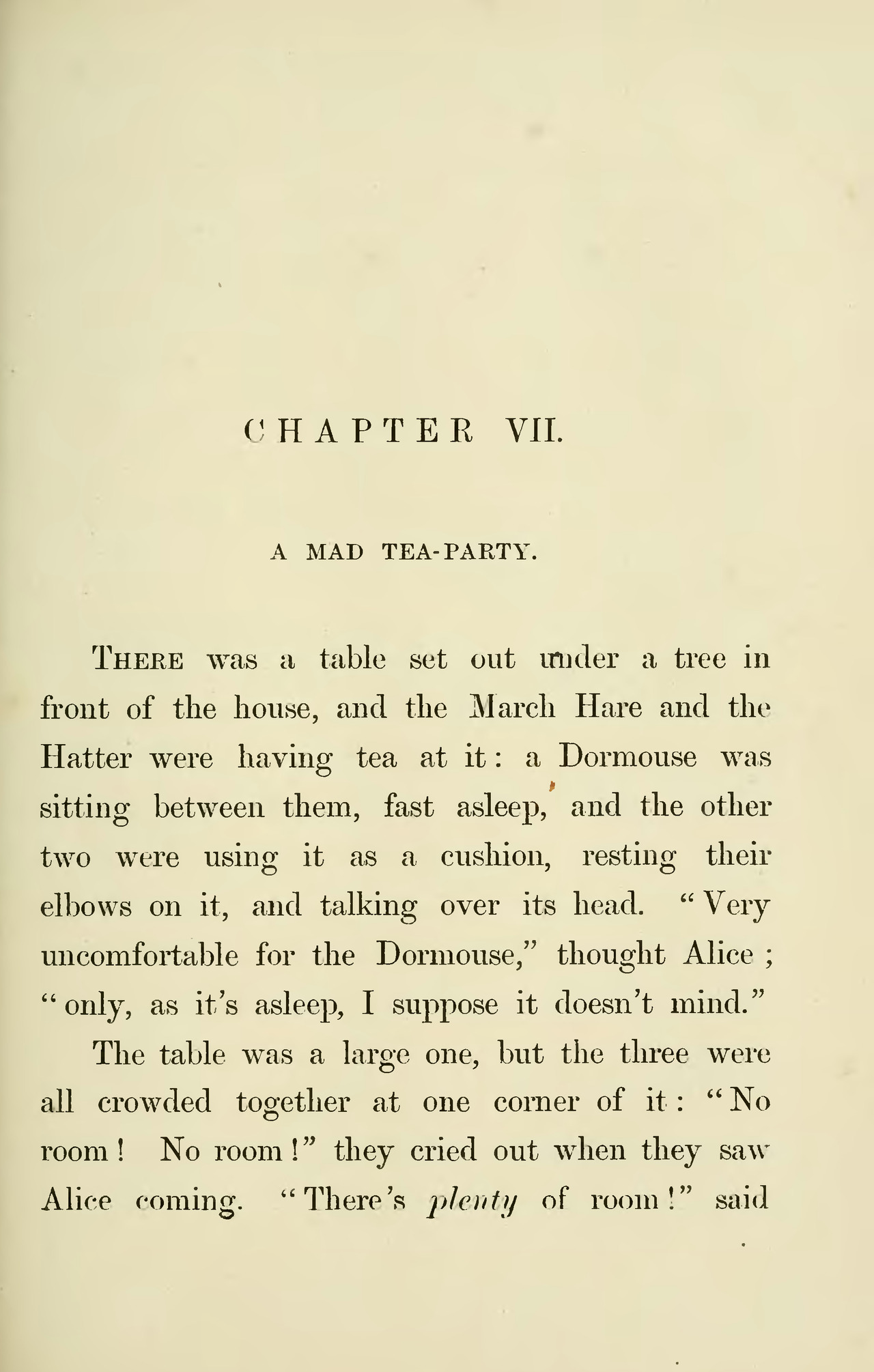
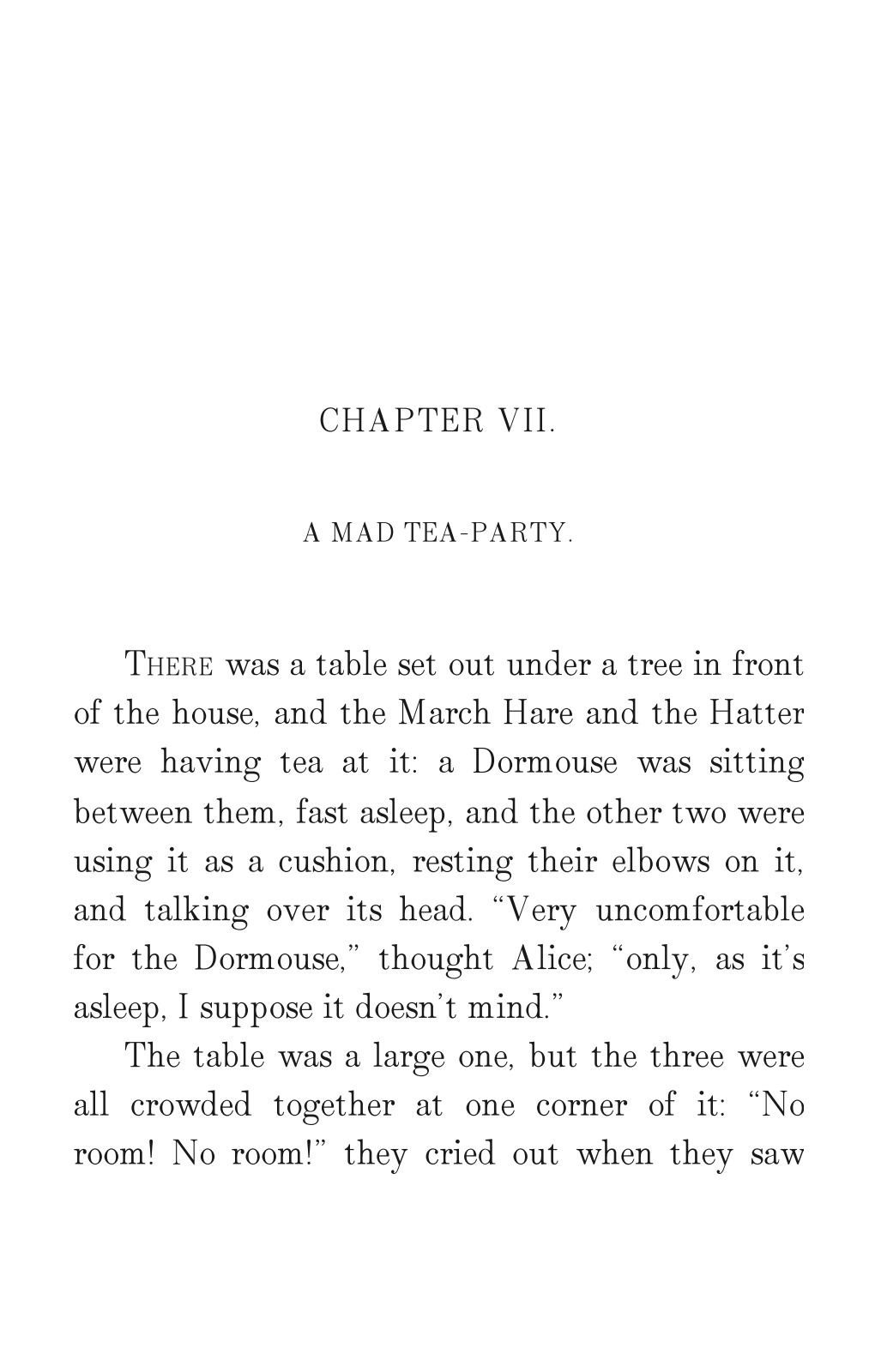
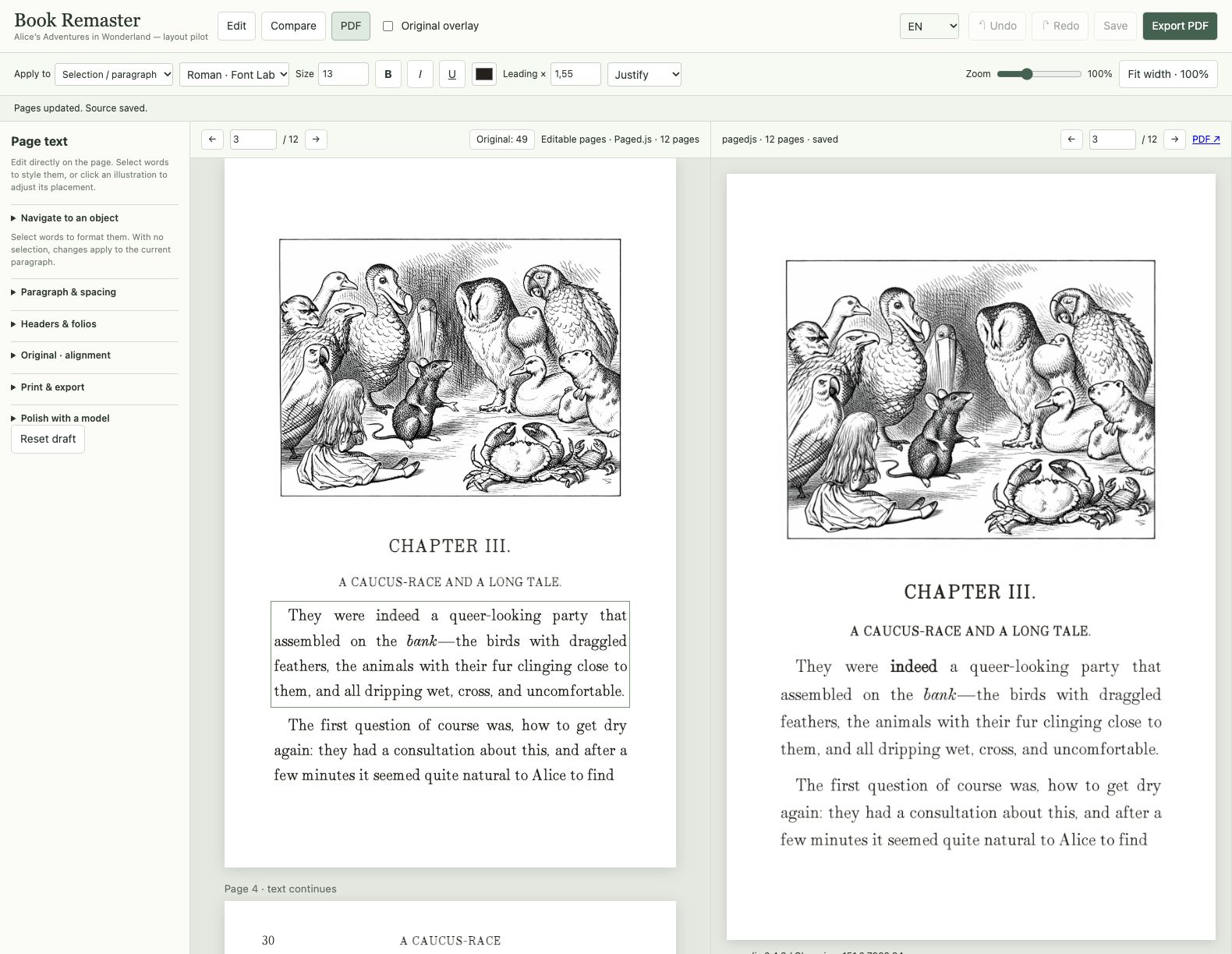
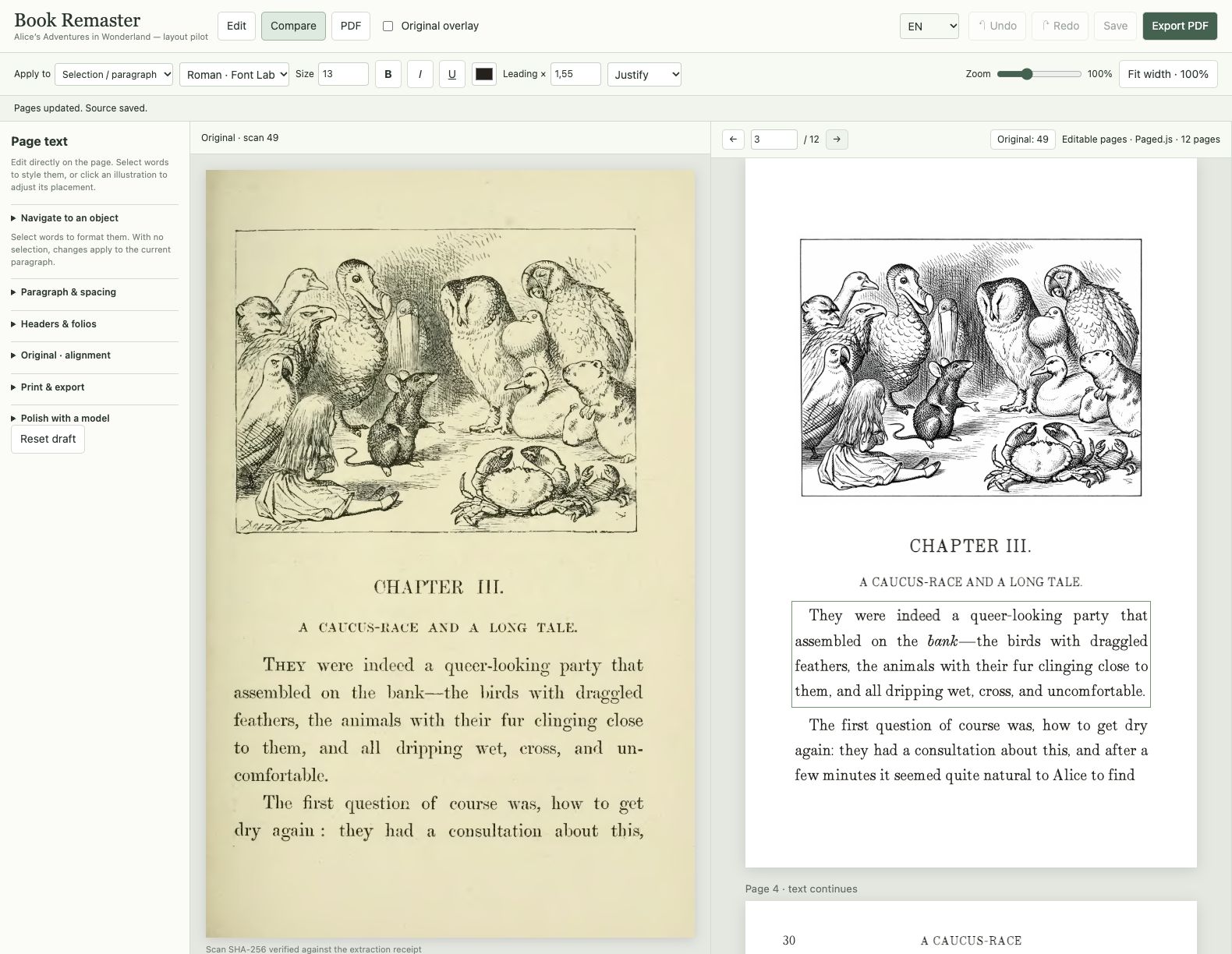
Our page editor keeps the source scan beside editable text and images as we refine the composition. The editor screenshots on this page show a 12-page Alice layout pilot drawn from 15 source scans. It is a separate workflow demonstration from the complete experimental PDFs in the Alice showcase.
Your images, your choice. Originals are kept unless a treatment is explicitly agreed. Image treatment can be combined with any of the three restoration modes.
Keep the original. Retain the supplied artwork without intentionally changing its content.
Clean and improve it. Agree on corrections to noise, background, contrast and visible damage using a sample. Cleaning cannot recover details that the source does not contain with certainty.
Redraw close to the original. Aim for the closest practical correspondence in subject and composition. AI-assisted reconstruction creates a new interpretation: faces, hatching, signatures and fine details can differ. It requires separate approval. Alice’s illustration comparison makes that difference visible.
Redraw in your chosen style. Agree on a visual direction and approve a sample before applying it to the rest of the book. This intentionally changes the original style. The brief and any AI-assisted method need separate approval.
Charts and diagrams. Reconstruct them as closely as possible to the source. Labels, values, connections, proportions and scientific meaning matter more than decorative reinterpretation. The agreed review checks those details; uncertainty is recorded. Examples include an editable calculus diagram and Jevons’s logic diagrams.
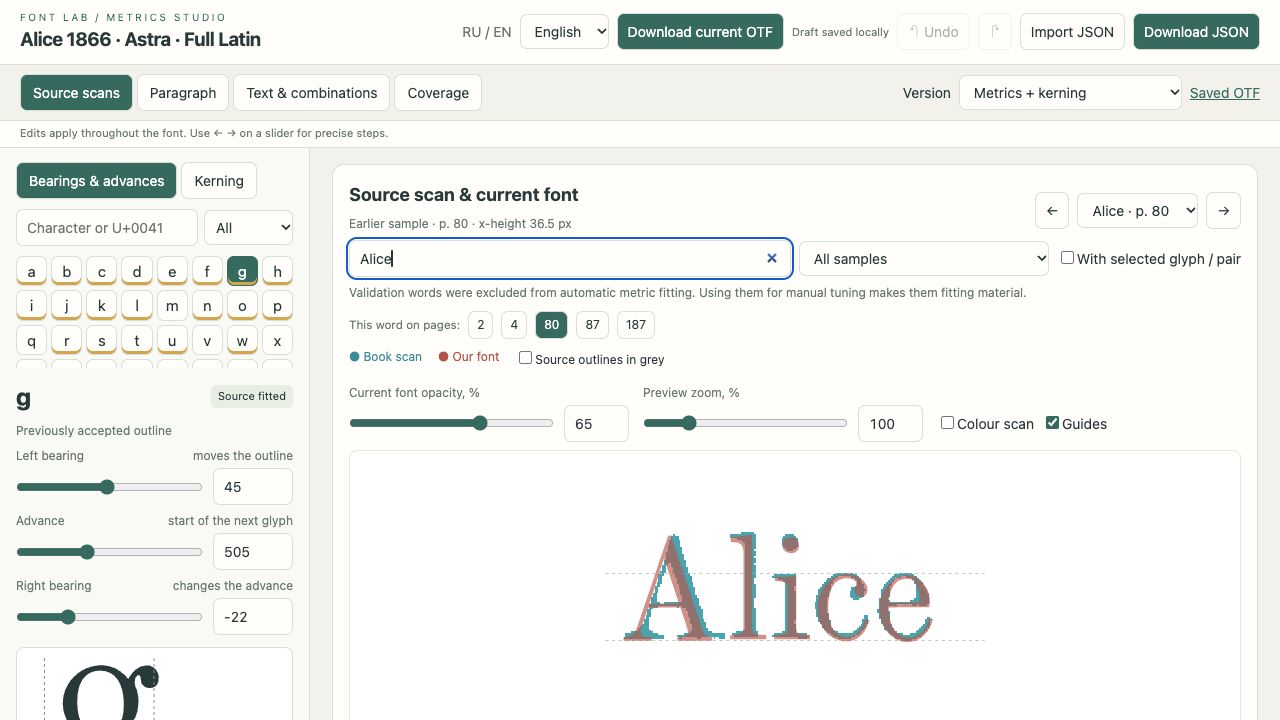
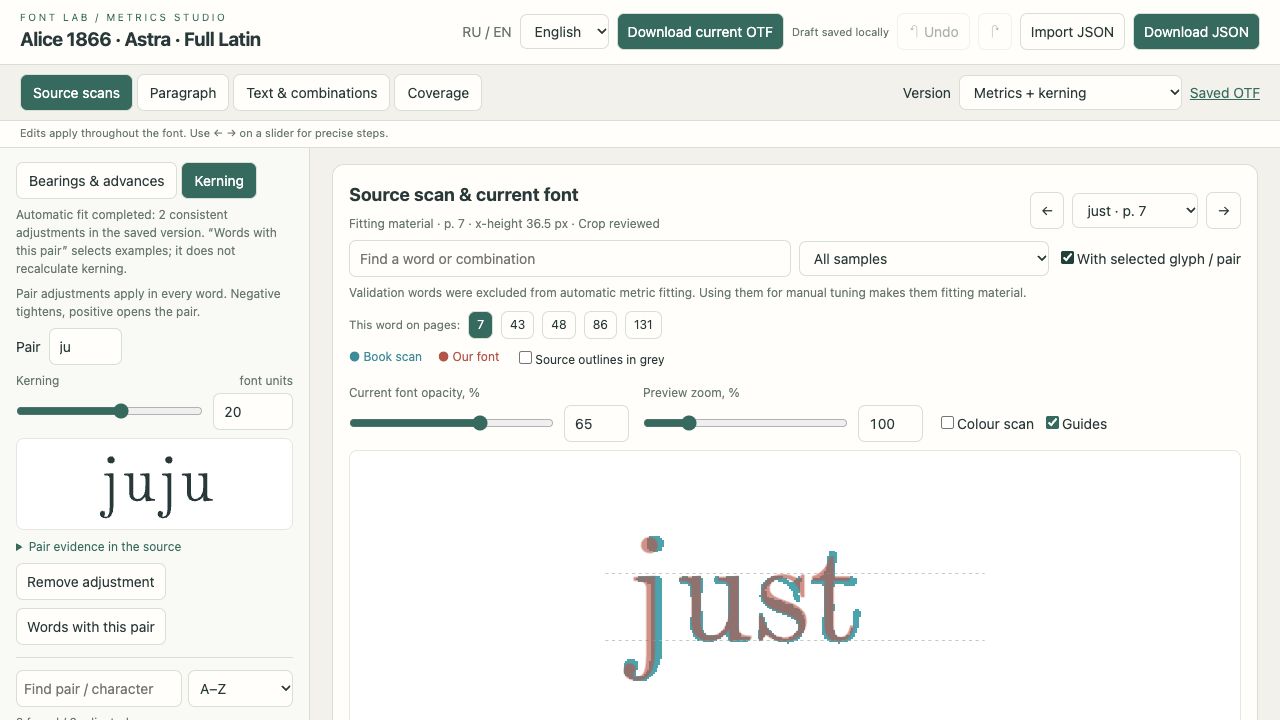
Letterforms are studied across multiple impressions, separating the shape of a letter from defects in one printing. Outlines, spacing and kerning are refined and exported to a working font. Explore eighteen distinct styles across Alice, The Wonder Clock and The Ship that Sailed to Mars, with specimens and original printed words. The sets do not promise broad multilingual coverage or exact facsimile typography.
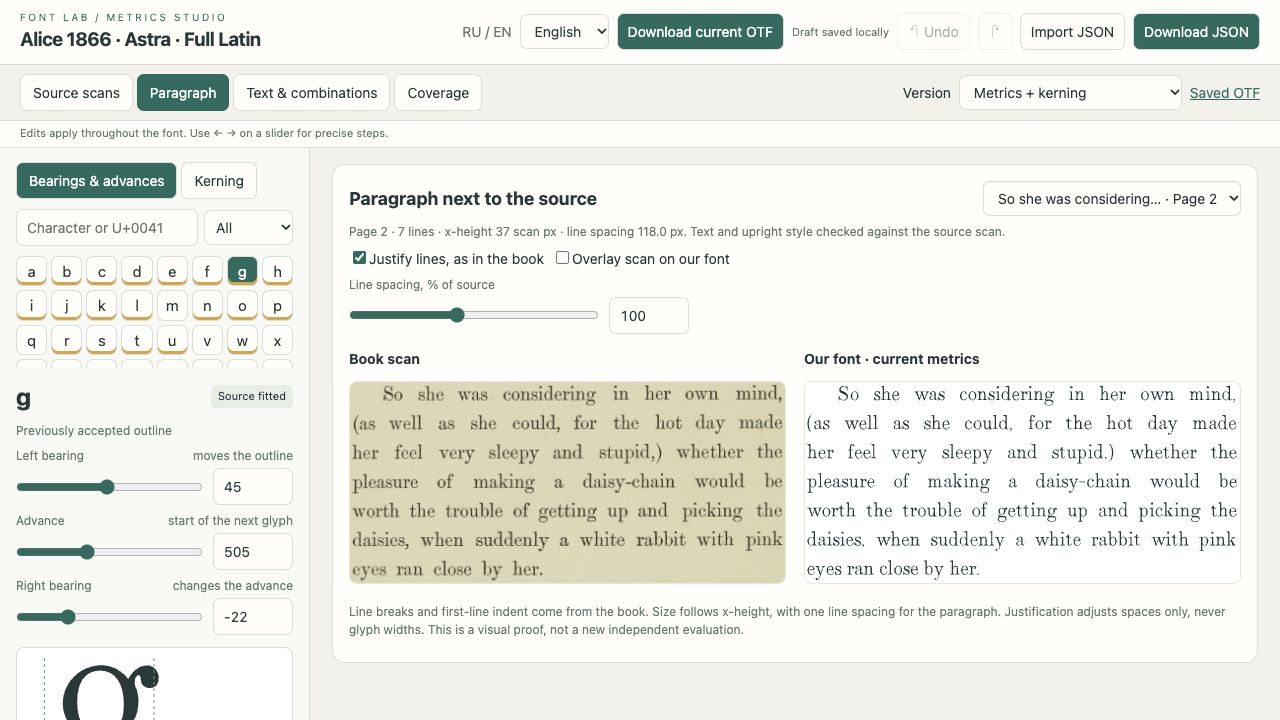
Compose text and images in the selected layout, then compare them with the source. A new layout can change pagination and line breaks. Original-layout reconstruction follows the historical page composition as closely as possible, while spacing, individual letterforms and small details may still differ. No mode promises an exact facsimile.
The agreed output can include a reading PDF, editable source and supporting image or diagram files. Commentary is separated from the author’s text. The editable format depends on the composition; other formats, print preparation and accessibility certification require agreement. An image preview is not editable source.
Structural and visual checks cover layout, headings, image placement and export. Full source proofreading compares the text against the source throughout the agreed scope. Editorial changes are a further, separately agreed task. An export check alone does not establish that every word or formula has been proofread. Each case records its actual scope and remaining limitations.
The workflow combines OCR, AI-assisted reconstruction, project-specific automation and typesetting tools with deliberate review decisions. The published examples use native MathML for equations, SVG for diagrams, Mermaid source for a logic tree and OpenType for the font experiment. AI output is reviewed within the agreed scope. We do not promise fully local processing: methods and any external providers handling client material are agreed before work starts.